
Researchers have combined potato and fava bean proteins to create a gluten-free meat alternative
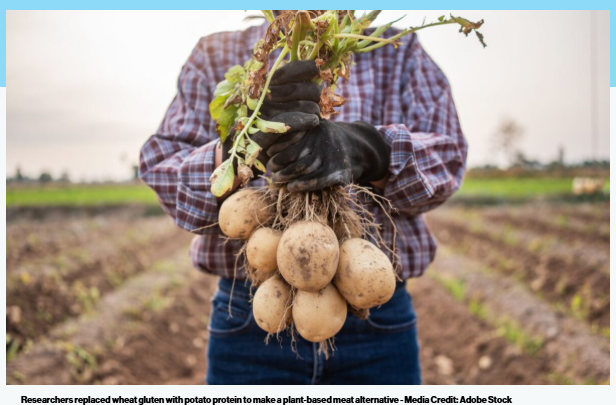
Researchers have developed gluten-free alternative proteins using potatoes.
By using potato protein instead of wheat gluten, a common ingredient in plant-based meat, the team successfully made a sustainable, gluten-free meat alternative.
The study was carried out by researchers from the University of Greenwich in London and the Heriot-Watt University in Edinburgh, and published in Food Hydrocolloids. As reported by Science Magazine, the research team combined fava bean protein with either wheat gluten or potato protein, then processed these ingredients using high-moisture extrusion, which combines heat, pressure, and mechanical force to create fibrous structures similar to the ones found in meat.
Parag Archaya from the University of Greenwich’s Bezos Center for Sustainable Protein described the wheat gluten version as softer and springier, but noted that the potato-based version also provided the desirable fibrous structures of meat.
However, according to Stephen Euston, a food scientist from Heriot-Watt’s School of Engineering and Physical Sciences, the potato version did fall short when it came to flavor, and featured a bitter and astringent taste with a strong, lingering aftertaste.
The researchers called for future work to include “bitterness mitigation” and further fine-tuning of mouthfeel. However, the combination of fava beans and potatoes still made for a sustainable, gluten-free alternative protein with a meaty texture.
‘Legumes can relieve multiple pressure points’
Earlier this year, a report by The Protein Project found that doubling European fava bean consumption by 2040 could help save €42 million per year in healthcare costs, reduce global pesticide use by 209 tonnes, and reduce CO2 emissions by 7 million tonnes. The report noted that “Legumes can relieve multiple pressure points across the food and feed systems, even if they are not a silver bullet.”
Like potatoes, fava beans are cheap and nutrient-dense. Fava beans are particularly high in protein, and are considered anuntapped source of sustainable plant protein.
SLSV Analysis and Insights
- Structure without gluten is now proven: The 75:25 fava bean-potato protein blend formed a stronger, more fibrous network under high-moisture extrusion than fava alone, and even outperformed wheat gluten on firmness, solving the core texture barrier for coeliac-safe alt-meat.
- Upcycling as best practice: International leaders are shifting from isolated soy/wheat to side-stream proteins. Potato protein, a by-product of starch processing, aligns with EU and UK circular-economy and Scope 3 targets while improving amino-acid complementarity with fava.
- Taste remains the commercial bottleneck: Electronic sensing showed higher bitterness, astringency and lingering aftertaste versus gluten, confirming that texture success does not equal consumer acceptance.
- Emerging solutions: Best practice is now moving to enzymatic debittering, carbohydrate masking, fat-encapsulated flavours, and removal of residual glycoalkaloids, plus AI-led sensory screening before human trials.
- Future trend: Diversified, cool-climate, nitrogen-fixing crops like fava will reduce reliance on soy and wheat, supporting allergen-free, clean-label, and climate-resilient portfolios. 99f3f2b1d6ed359f
SLSV EarthCraftShop Recommends
- Adopt a blend-first strategy: Do not commercialise potato protein alone. Use the 75:25 fava-potato ratio as a baseline for pilot extrusion.
- Invest in flavour before scale: Prioritise debittering trials, masking systems, and consumer panels with coeliac and gluten-sensitive consumers.
- Build a sustainable sourcing story: Secure traceable, upcycled potato protein and regenerative fava supply to meet retailer ESG and clean-label requirements.
- Position for inclusion: Market as gluten-free and soy-free, but avoid over-claiming on health until human trials validate digestibility and tolerability.
Article Credit: plantbasednews, SLSVoriginal source/SLSV