
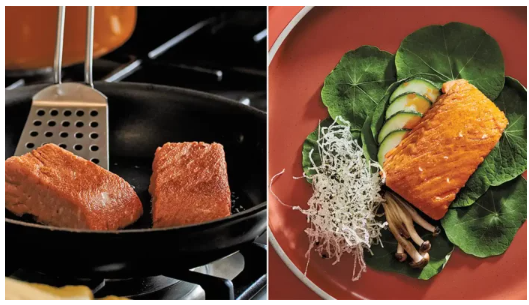
The ocean feeds billions—but at what cost?
For centuries, seafood has been a cornerstone of global diets, revered for its flavor and nutrition. But today, our oceans are in crisis. Global seafood consumption has more than doubled since the 1960s, pushing fish stocks and marine ecosystems to the brink. According to the United Nations FAO, over 34% of global fish stocks are overfished, while nearly 60% are fully exploited. The culinary industry, through restaurant demand and menu trends, plays a critical role in both the problem and the solution.
For chefs, operators, and foodservice professionals, the challenge is clear: how to continue offering satisfying seafood options while protecting our oceans for generations to come.
The Challenges We Face
Overfishing
Overfishing has decimated many species, reduced biodiversity and destabilized marine ecosystems. Iconic fish like tuna and cod have suffered catastrophic population declines. Beyond targeted species, bycatch—unintended marine life caught in nets kills millions of sea turtles, dolphins, and seabirds annually.
Ocean Pollution
The seafood industry also contributes to ocean pollution. Ghost nets and fishing gear are major contributors to the plastic waste choking our seas. Runoff from agriculture creates hypoxic “dead zones” devoid of marine life. Microplastics, carried through the food chain, now contaminate even the seafood we eat.
Climate Change
Climate change compounds these pressures. Rising ocean temperatures and acidification threaten fish habitats and disrupt migration patterns, making fisheries less predictable and sustainable.
The Culinary Industry’s Contribution
Restaurants, chefs, and foodservice companies are on the front lines of seafood demand. High-impact species like salmon, shrimp, and tuna dominate menus but carry some of the largest environmental footprints. Additionally, seafood preparation often results in significant food waste, further burdening already strained resources.
By driving consumer choices, the culinary industry has the power—and the responsibility—to influence more sustainable options.
Plant-Based Seafood as a Solution
Enter plant-based seafood. Over the last few years, this category has emerged as a promising alternative, offering familiar seafood experiences without the environmental cost. Brands are pioneering technologies like modular layering, proprietary plant blends, and whole-cut replication to achieve the flaky texture and briny flavor of fish.
Plant-based seafood offers clear benefits:
- Reduces pressure on wild fish stocks
- Prevents bycatch
- Reduces greenhouse gas emissions
- Eliminates exposure to mercury and microplastics
For chefs, these products offer menu diversity while demonstrating leadership in sustainability.
Spotlight: A Conversation with Ofek Ron, Co-Founder & CEO of Oshi Foods
Nina Curtis: What inspired you to create Oshi, and why start with salmon?
Ofek Ron: I’ve been vegan for 13 years, and back in 2017, I tried the Impossible Burger in New York. That experience opened my eyes to the power of food innovation. At the time, no one had really nailed seafood—especially cooked salmon fillets, which are the most consumed fish globally. I realized that if we could get this right, we could be the Impossible of fish.
How did you turn this vision into reality?
Ofek: I brought together a team of experts—a fish biologist, a mechanical engineer, and a chemist. Each contributed knowledge essential to developing our proprietary process, which we call modular layering. We essentially build the fillet flake by flake, injecting plant-based fats to replicate the white striations you see in traditional salmon.
And the environmental impact?
Ofek: Salmon farming today is unsustainable. These are massive ocean-based cages full of stressed, sick fish often treated with antibiotics. About 25% of them die before reaching consumers. Plus, the carbon footprint is massive due to overseas shipping. Our product is made with water, soy protein, fungi (from our partnership with The Better Meat Co.), algae oil, and vegetable oils—clean, high-protein, and mercury-free.
What feedback are you getting from chefs and consumers?
Ofek: The response has been overwhelmingly positive. Early versions weren’t fishy enough—then too fishy. We adjusted the flavor, texture, and density to reach a balance. The feedback continues to be very positive, and we are in it for the long haul. Chefs and consumers alike are thrilled to have a safe, delicious option that doesn’t compromise their values or the planet.
What’s next?
Ofek: We’re working on a white fish next, and then something completely novel. But for now, our focus is on making salmon our anchor product. It’s not just about launching something new—it’s about building a better food system.
And a myth you’d like to bust?
Ofek: That plant-based seafood is “weird.” Once people try it, they get it. We want it to become normalized—not an alternative, but a choice.
Other Brands to Watch
In addition to Oshi, other pioneering companies are pushing the boundaries of plant-based seafood:
Mind Blown Plant-Based Seafood Co. – eatmindblown.com/pages/wholesale
This women-owned company creates craveable, chef-crafted alternatives to shrimp, scallops, crab cakes, and lobster using konjac root, plant proteins, and algae. With bold flavors and culinary credibility, Mind Blown offers foodservice operators a fun and familiar way to introduce sustainable seafood to their menus. They are vocal advocates for ending overfishing and ocean degradation.
Konscious Foods – konscious.com/pages/foodservice With a chef-driven focus on sushi rolls, poke bowls, and onigiri, Konscious brings authentic plant-based seafood to foodservice with sustainability at its core.
Aqua Cultured Foods – aquaculturedfoods.com Specializing in whole-cut, sushi-grade plant-based seafood, Aqua Cultured currently offers tuna and scallops made through a proprietary microbial fermentation process. Their work supports marine conservation by offering low-impact, clean-label products.
A Chef’s Challenge: Lead the Way for the Oceans
As chefs, operators, and decision-makers in foodservice, we are not only curators of taste—we are stewards of the future. Our oceans are in crisis, and the culinary industry has long contributed to the problem through unsustainable sourcing, menu trends, and demand for high-impact species. Now is the time to be part of the solution.
The challenge:
- Reimagine your seafood offerings by integrating plant-based alternatives.
- Reduce dependency on overfished species like salmon, tuna, and shrimp.
- Educate your guests on sustainable choices and why they matter.
- Partner with companies like Oshi, Mind Blown, Konscious Foods, and Aqua Cultured Foods that are creating ocean-friendly solutions.
The ocean feeds us—but it cannot sustain us if we don’t change course. Let’s lead with intention, creativity, and care—for the health of our guests, our planet, and generations to come.
Chef Nina Curtis is a celebrated professional in plant-based cuisine, named one of the 25 Top Women in Foodservice and Hospitality for 2024. With over two decades of culinary excellence, she has redefined the possibilities of plant-based cuisine, earning widespread acclaim from vegans and non-vegans alike.
In 2020, she was honored as America’s Top Hospital Chef, highlighting her commitment to health and flavor. In 2023, Chef Curtis curated a historic plant-based menu for a White House State Dinner at the invitation of First Lady Dr. Jill Biden, honoring Prime Minister Narendra Modi.
This groundbreaking event showcased her ability to elevate plant-based cuisine to luxurious heights.As the Director and Executive Chef of Plant’ish & Co. Culinary Arts, Chef Curtis continues to innovate and inspire through her delectable creations and leadership.
Her role in the American Culinary Corps, a James Beard Foundation and State Department initiative, underscores her dedication to culinary diplomacy and cultural exchange. Chef Curtis’s influence extends beyond the kitchen.
She is a passionate advocate, sharing her expertise through captivating dining experiences and enlightening lectures, inspiring culinary professionals and enthusiasts worldwide with her imaginative and nourishing creations. Learn more at Chef Nina Curtis’s website.
Article Credit: totalfood