
The travel industry is evolving to offer barrier-free tours for individuals with disabilities, enhancing accessibility through specialized programming and improved planning resources.
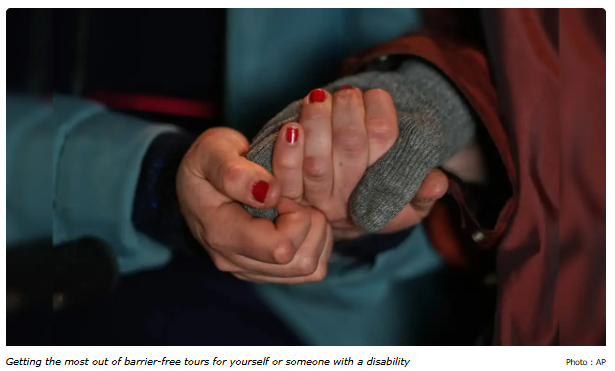
Tourists with disabilities face various obstacles, including physical barriers like out-of-service elevators and less visible challenges such as overwhelming noise or lengthy outings. As the baby boomer generation ages, the travel industry is adapting to meet the needs of older adults who may require additional assistance.
True inclusivity in accessibility extends beyond just physical limitations, accommodating a diverse range of tourists, including those with autism or dementia. In response, cultural institutions worldwide are implementing specialized guides and barrier-free tours, often enhanced by technological advancements.
Innovative Accessibility Solutions
To better cater to visitors with both visible and invisible disabilities, museums and cultural institutions have introduced innovative tours. These offerings include sign-language tours for individuals who are deaf or hard of hearing, tactile events for those with blindness or low vision, and programs tailored for people on the autism spectrum. Additionally, tourism agencies focused on serving disabled travelers are emerging.
Ashley Grady, an accessibility program specialist at the Office of Visitor Accessibility of Washington’s Smithsonian Institution, emphasizes that these barrier-free tours convey a welcoming message to individuals with disabilities. She states, “We want you to come to our museums. We want you to see yourselves reflected in our staff and our collections.”
Addressing Accessibility Gaps
Despite progress, significant gaps remain in accessibility awareness. Ivor Ambrose, managing director of the nonprofit European Network for Accessible Tourism, highlights the ongoing lack of understanding regarding the varying accessibility needs of travelers. He notes, “This is actually a really big market and an opportunity, which is still not fulfilled by the operators in all these different areas of tourism.”
Planning and Research
Experts recommend thorough planning to maximize barrier-free options. Josh Grisdale, founder of Accessible Japan, suggests utilizing resources such as Reddit, YouTube travel videos, and Google Street View to assess accessibility features before traveling. He also advises collaborating with hotel concierges to ensure venues meet specific accessibility requirements.
In Africa, careful planning is essential for enjoying activities like safaris or climbing Mount Kilimanjaro. Joanne Ndirangu, founder of Scout Group Agency, encourages travelers to consult local agents who can provide insights into accessible options in the region.
Specialized Programming
General public tours may not always suit individuals with disabilities due to various factors, such as high exhibits or excessive noise levels. The Smithsonian Institution offers a sensory-friendly program called “Morning at the Museum,” allowing neurodivergent participants and their families to explore the museum in a controlled, judgment-free environment.
In Berlin, the Catholic aid organization Malteser Deutschland has developed barrier-free tours for visitors with dementia at locations such as the Berlin Zoo and the Museum of Natural History, focusing on smaller groups to prevent overwhelming participants.
Communication and Feedback
Ndirangu emphasizes the importance of open communication regarding accommodation needs. She states, “Give us that opportunity to give you solutions.” Travel companies are encouraged to integrate the costs of providing barrier-free services into their pricing models, ensuring accessibility is a standard offering rather than an exception.
Grady at the Smithsonian notes that participant feedback has led to adjustments in programming, enhancing accessibility features to better serve all visitors. She concludes, “They’re literally just trying to experience a visit just like anyone else.”
Article Credit: timesnownews