
Developed by researchers at Tulane University, the effort has revealed that the highest risk areas aren’t always the ‘garbage patches’ where plastics visibly pile up, but often where plastics overlap with higher populations of marine life and pollutants.
After talks to formulate a globally-unified approach to tackling the plastic pollution crisis fizzled-out to a disappointing whimper late last month, and as plastic pollution continues to be one of the planet’s most pressing environmental threats, scientists have constructed the first global assessment of just where plastics pose the greatest ecological risks to marine ecosystems.
Developed by researchers at Tulane University, New Orleans in North America, the effort has revealed – perhaps surprisingly – that the highest risk areas aren’t always the ‘garbage patches’ where plastics visibly pile up, but often where plastics overlap with higher populations of marine life and pollutants.
What this means, the scientists have concluded, is that even waters with relatively modest levels of plastic pollution can face severe ecological threats.
This study goes beyond measuring where plastics accumulate, mapping instead worldwide “ecological risk hotspots” by evaluating four major pathways of harm for marine life: ingestion, entanglement, transport of toxic pollutants, and the leaching of harmful chemicals as plastics break down.
The findings have since been published in the scientific journal, Nature Sustainability.
“Plastic pollution in the ocean is widely recognised as a global concern, but the ecological risks it poses remain poorly understood,” said the study’s lead author, Yanxu Zhang, an associate professor of Earth and Environmental Sciences at Tulane School of Science and Engineering. “We wanted to fill this knowledge gap by systematically assessing how plastics interact with marine life and ecosystems through multiple risk pathways.”
The team did so by utilising newly developed methods to evaluate risk by bringing together global models of ocean plastics, marine species distribution, and pollutant levels to create a new framework for assessing these ecological threats.
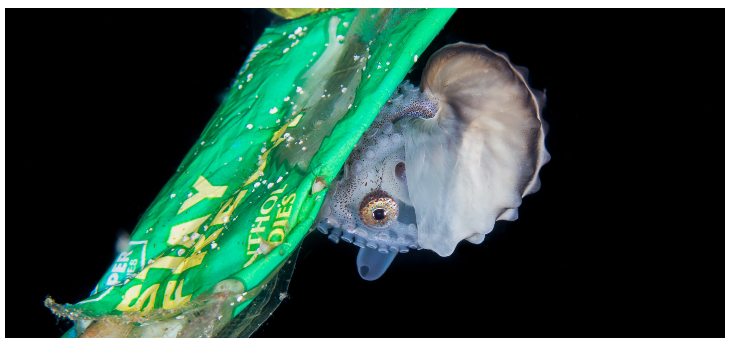
Understandably, the findings have now highlighted the need to prioritize clean-up and prevention not only in areas with visible plastic accumulation but also in the regions where marine life is most vulnerable.
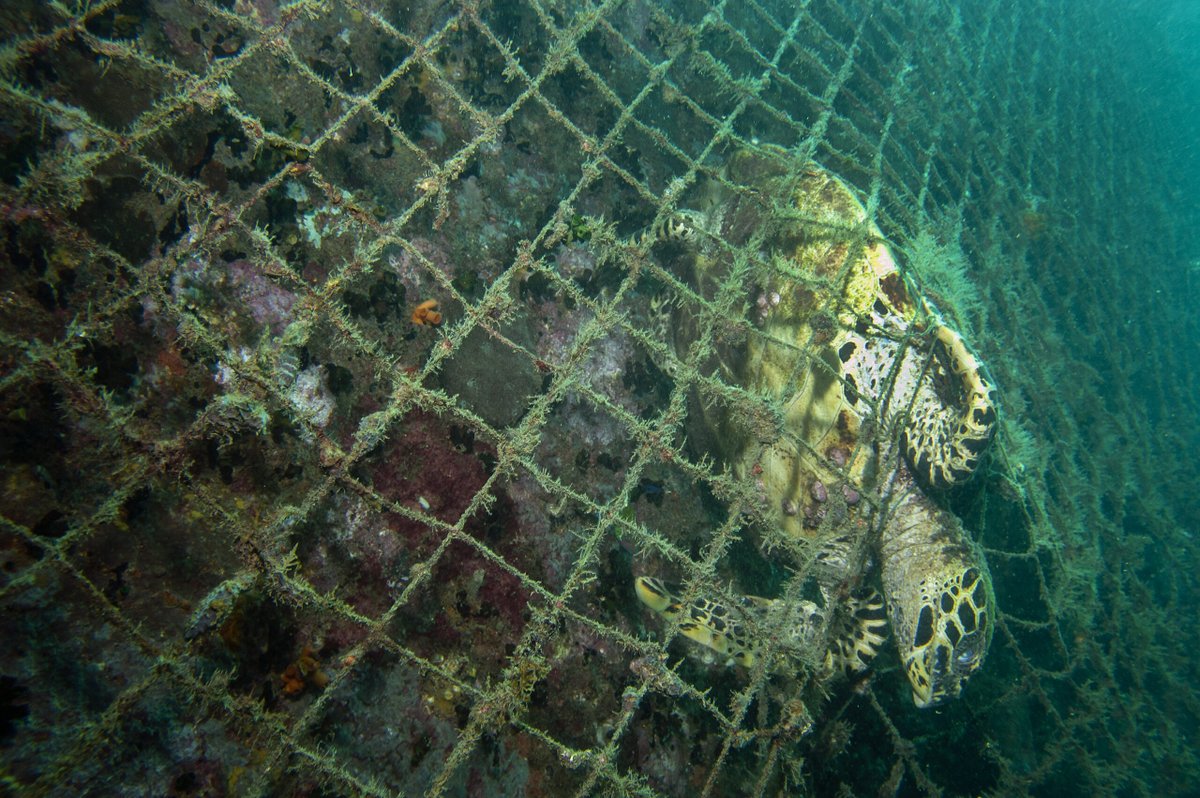
Some of those high-risk zones include the mid-latitude North Pacific and North Atlantic oceans, parts of the North Indian Ocean and coastal East Asia. Waters rich in both nutrients and marine life drive risk in some cases, even when plastic levels are not the highest. Coastal areas near busy fishing grounds are particularly vulnerable to entanglement hazards from ‘ghost gear’ – the term used for abandoned fishing gear in the water, such as gillnets, traps, fishing lines, and trawl nets.
The study has also identified the role that plastics can play as a ‘conveyor belt’ for pollutants such as the neurotoxic methylmercury and so-called ‘forever chemicals’, two contaminants that can build up in marine food webs and threaten human health.
Elevated risks occur in regions where contaminated plastics are most likely to be ingested by marine organisms. The study indicates that without stronger global action, those ingestion risks could increase by more than threefold by 2060.
The better news is, that with coordinated efforts to reduce plastic use and improve waste management – especially in rapidly developing regions – the threats could be reduced, substantially.
“By mapping the global distribution of plastic-related ecological risks, we provide a scientific foundation to guide ocean cleanup priorities and policy-making,” said Zhang. “This work comes at a crucial moment. We hope our results can help target interventions where they will have the greatest impact.”
Late last month, talks to construct a robust and ambitious Global Plastics Treaty, a multi-lateral and legally-binding legislation to reduce plastic production and tackle the growing plastic pollution crisis collapsed under the weight of petro-chemical lobbying from within the plastic and fossil fuel industry and the nations referred to often as petrostates, including the USA, Saudi Arabia, and Russia.
Global production of plastics is set to triple by 2060 to over one billon tonnes. As it stands, consensus is needed among all United Nations member states on a treaty text before any progress can be made to tackle the issue on a global scale. It’s this that has made it straightforward for the less ambitious nations to block a text draft deemed too strong.
Looking to the next round of negotiations, countries that favour a robust treaty will need to consider taking firmer actions, such as forcing a vote on the issue. Research like that carried out by Tulane University could com as important leverage in bringing a more conclusive resolution to the issue.
Led by Tulane University, this research is the result of a collaborative effort between scientists from across Nanjing University and South China University of Technology in China, the Scripps Institution of Oceanography at the University of California San Diego, Concordia University in Canada, and the Institute of Geological and Nuclear Sciences in New Zealand.
Article Credit: oceanographicmagazine