
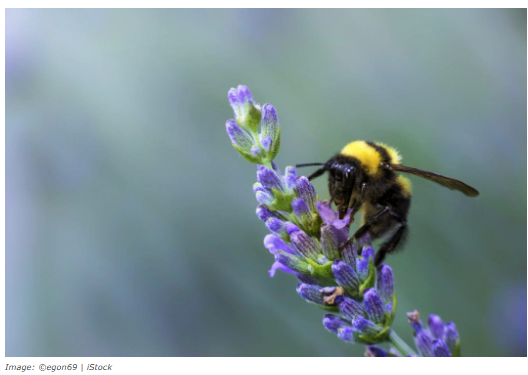
A collaborative study by Virginia Tech and the University of Tennessee demonstrates that a natural polyethene-like polyester secreted by ground-dwelling Colletes bees degrades in soil within months, providing a blueprint for scalable eco-friendly plastics
Published in the Proceedings of the National Academy of Sciences (PNAS), the study reveals that this bio-produced polyester degraded significantly within just four months, offering a promising chemical template to replace non-degradable petrochemical plastics that persist in the environment for centuries.
Chemical biomimicry and soil degradation dynamics
Polyethene accounts for approximately one-third of global plastic production (~160 million tons annually), dominating single-use packaging. However, conventional polyethene resists natural breakdown, fragmenting into persistent microplastics that contaminate terrestrial and aquatic ecosystems.
Key findings regarding the bee-derived natural polymer include:
Polyethene-like architecture
The cellophane bee secretes a cross-linked, semicrystalline polyester to line and waterproof its underground nest cells. This material closely mimics the strength, flexibility, and barrier properties of commercial polyethene.
Rapid natural biodegradation
Unlike many commercial bioplastics that require high-temperature industrial composting facilities to break down, the natural bee polyester degraded in standard soil samples, reducing its mass from 73% to 40% in just four months.
Overcoming industrial scalability bottlenecks
Rather than harvesting the material directly from bees, the research team is identifying the exact molecular structures and enzymatic pathways responsible for rapid degradation to synthetically reverse-engineer and manufacture identical polymers at commercial scale.
Ecological significance and downstream impact
Understanding the chemical linkages inside Colletes polyester creates an opportunity to engineer next-generation bio-based polymers:
- Eliminating microplastic persistence:
- Developing synthetic analogues of the bee’s polyester ensures that discarded packaging will naturally break down into harmless organic compounds rather than persistent microplastic residues.
- Bridging the gap in Bioplastics:
- Current market alternatives often sacrifice physical durability or fail to degrade in typical environmental conditions. The bee’s cross-linked, semicrystalline structure achieves high structural integrity alongside rapid environmental clearance.
SLSV Analysis and Insights – Bee-Derived Biodegradable Polyester
- What the Study Proves
- Performance + degradability can coexist: The Colletes bee polyester mimics polyethylene in structure and waterproofing, yet degraded in ambient soil from 73% to 40% of nest-lining mass in just 4 months, becoming brittle by 11 months.
- No industrial composting needed: Unlike many commercial bioplastics, it broke down in standard soil samples, not high-temperature facilities.
- Blueprint, not harvest: Researchers aim to reverse-engineer the molecular structure and enzymatic pathway for synthetic scale-up, not farm bees for plastic.
2. International Best Practices It Aligns With
- Design for end-of-life: Best practice now requires proving degradation in real soil, marine, and home-compost conditions, not just lab conditions.
- Function first: EU Packaging and Packaging Waste Regulation (PPWR) and emerging EPR schemes favour materials that perform like conventional plastic during use, then disappear safely after disposal.
- No greenwashing: Claims must be backed by lifecycle assessment (LCA), ecotoxicity data, and third-party certification before market claims.
- Safe degradation: Degradation products must be non-toxic to soil microbes, plants, and water systems – a key gap in early PLA/PHA products.
3. Emerging Trends
- Biomimicry as R&D model: Learning from nature – bee silk-polyester composites, spider silk, mycelium – instead of inventing polymers from scratch.
- Tunable chemistry: Cross-linked, semicrystalline polyesters with ester bonds that stay stable on the shelf but cleave when exposed to soil moisture and enzymes.
- Enzyme-triggered breakdown: Next-gen plastics embedded with dormant enzymes activated by heat, moisture, or pH change.
- Drop-in replacements: Focus on polyethylene replacement, which is ~one-third of global plastic production (∼160 million tons annually).
4. Future Outlook and Risks
- Priority applications: Single-use packaging, food wrap, agricultural mulch film, and hygiene products where collection/recycling is hardest.
- Scale-up challenge: Lab synthesis must match cost, barrier properties, and shelf-life of polyethylene to be commercially viable.
- Policy push: The forthcoming global plastics treaty is expected to accelerate demand for soil-degradable alternatives and penalise persistent polyolefins.
- Watch-out: Without clear standards, soil-degradable claims could repeat the PLA confusion – SLSV insists on verified degradation timelines, soil health data, and traceability before adoption.
Article Credit: openaccessgovernment , SLSV original source/SLSV