
All comments by Josh Webster, Head of Brand at Croxsons, the 150 year old, family owned glass packaging specialist and the UK’s only certified B Corp glass packaging company.
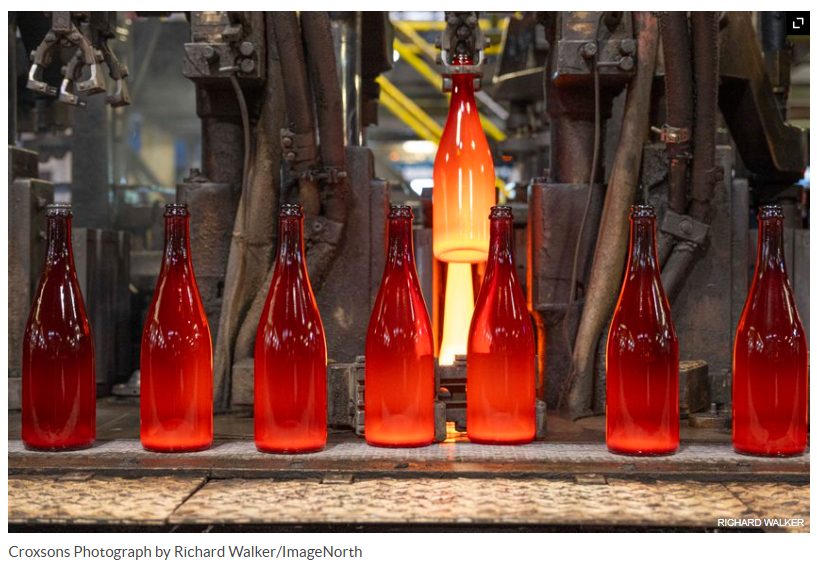
For the glass packaging industry, reducing carbon emissions presents a complex challenge. Glass is infinitely recyclable, yet its manufacture requires significant energy and resources. For packaging suppliers, the question is not simply how to reduce emissions within their own operations, but how to influence the environmental impact of the products they bring to market.
For Croxsons, a fifth-generation family business and certified B Corp, that distinction is fundamental to its sustainability strategy.
Using Greenly to measure greenhouse gas emissions across Scopes 1, 2 and 3, Croxsons has identified where its greatest environmental impact lies. In 2025, purchased products accounted for approximately 97% of its measured carbon footprint, highlighting the importance of collaboration with manufacturers and customers.
The business is also making progress within its own operations. Between 2024 and 2025, total measured emissions fell from approximately 18,000 to 17,000 tonnes of CO₂ equivalent, a 5.6% reduction. Scope 1 emissions decreased by 78%, while travel and commuting emissions fell by 33%.
However, the greatest opportunity for Croxsons lies in the packaging itself. Its Rightweight® approach challenges unnecessary glass weight while maintaining strength, functionality and presentation. The British-made 330ml Mountain bottle, for example, has achieved a 9.5% weight reduction, demonstrating how more efficient design can reduce material requirements.
Similarly, Sovereign, the UK’s first British-made sparkling wine bottle, combines 49% post-consumer recycled glass with domestic manufacture. Brought to market by Croxsons in collaboration with glass manufacturer Encirc, it offers English and Welsh producers an alternative to imported bottles, with the potential to reduce transport-related emissions by an estimated 4.6–7.7 tonnes of CO₂ per 100,000 bottles.
These developments form part of Croxsons’ wider sustainability approach, supported by its 2025–2030 Sustainability Roadmap. Internally, the business has introduced practical changes, including improved office waste disposal practices and a shift towards more digital ways of working to reduce printing. Employees have also received training on B Corp certification, helping them understand its importance to the business and how responsible practices can be reflected in everyday decisions.
For Croxsons, this approach also creates a competitive advantage. By combining environmental measurement with technical expertise and supply-chain innovation, the business can help customers make more informed packaging decisions that balance sustainability, quality, cost and resilience.
Reducing carbon is therefore not just an internal responsibility. It requires collaboration throughout the packaging value chain, turning environmental data into practical improvements in how glass packaging is designed, manufactured and sourced.
Summary:
Article by Richard Walker focuses on Scope 3 decarbonization of glass – noting >50% of wine’s carbon footprint comes from glass manufacture and distribution, not the product itself.
SLSV Insights:
- Hotspot Shift: From bottle lightweighting to furnace fuel switch. Industry moving from natural gas to hydrogen / electric / biofuel hybrid furnaces (Encirc/Diageo, Ardagh trials).
- Circular Lever: Higher cullet % is fastest carbon win – every 10% cullet cuts ∼5% CO2 and ∼3% energy, but UK collection at 74% still lags EU best.
- System vs Material: Article argues glass vs paper/aluminum debate is false – need localized production, refill/reuse models, and EPR reform that rewards infinite recyclability over lightweight single-use.
- Commercial Risk: Brands face greenwashing if they push glass as premium sustainable while ignoring transport emissions of empty bottles.
Glass won’t disappear, but its future is electric, high-cullet, and reusable.
Article Credit: spnews