
Long-term exposure to air pollution may affect memory, concentration and brain health. Research links fine particulate matter to cognitive decline and dementia risk, raising concerns about its lasting neurological effects.

Air pollution may be doing more than irritating your eyes or triggering a persistent cough. Over time, the microscopic particles suspended in polluted air could also affect the brain, with research linking long-term exposure to changes in cognitive function, memory and the risk of dementia.
The concern goes beyond older adults. Studies examining brain imaging and cognitive performance have found associations between air pollution exposure and changes in brain structure, as well as difficulties with reasoning, problem-solving and executive function. However, researchers caution that the strength of these associations varies, and the precise mechanisms are still being investigated.
How Does Polluted Air Affect The Brain?
Fine particulate matter, known as PM2.5, is a particular concern because its tiny particles can penetrate deep into the lungs and enter the bloodstream. Researchers believe air pollution may influence the brain through several pathways, including systemic inflammation, oxidative stress and damage to blood vessels.
Some particles may also reach the brain through pathways involving the nose and olfactory system. Scientists are investigating whether these processes can contribute to neuroinflammation and interfere with the normal functioning of brain cells.
The blood-brain barrier, which helps protect the brain from harmful substances circulating in the blood, may also be affected by pollution-related biological changes. These mechanisms offer plausible explanations for the observed associations, although their contribution to long-term cognitive damage in humans is not yet fully established.
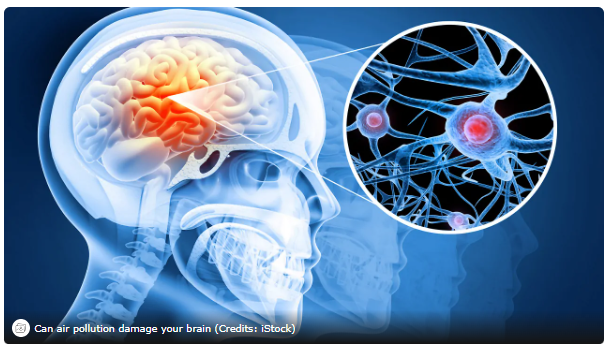
Memory, Concentration And The Risk Of Dementia
A systematic review published in Neurotoxicology in 2023 examined 11 studies combining air pollution exposure, brain imaging and cognitive outcomes. Most reported associations between pollution exposure and cognitive performance, while imaging studies identified differences in areas including the prefrontal cortex and temporal lobes, which are involved in planning, attention, memory and other cognitive functions.
A separate systematic review and meta-analysis published in Nature Aging in March 2025 analysed 28 longitudinal cohort studies investigating long-term PM2.5 exposure and dementia. It reported a statistically significant association between exposure and dementia risk, although the researchers rated the overall strength of evidence as limited and noted inconsistencies across studies.
These findings do not mean that everyone exposed to polluted air will develop memory problems or dementia. Nor do they establish that pollution alone causes these conditions. Age, genetics, cardiovascular health, education and other environmental factors can influence cognitive outcomes.
Can The Damage Be Prevented?
Reducing exposure is a practical step, particularly for people living in cities with persistently high pollution levels. Checking local air-quality forecasts, avoiding strenuous outdoor exercise during severe pollution episodes and using a well-fitted N95 or equivalent respirator when exposure cannot be avoided can help reduce inhalation of fine particles.
Indoor air quality matters, too. Keeping windows closed during periods of heavy outdoor pollution, when ventilation conditions allow, and using a correctly sized air purifier with a HEPA filter may help lower indoor particle levels. Avoiding tobacco smoke and indoor sources of combustion can further reduce exposure. Importantly, persistent forgetfulness, difficulty concentrating or a noticeable decline in daily functioning should not automatically be blamed on pollution. Sleep problems, stress, nutritional deficiencies, medication effects and neurological conditions can produce similar symptoms and may require medical evaluation.
The bigger message is that air pollution should not be viewed solely as a respiratory hazard. Researchers are increasingly investigating its possible role in brain ageing and cognitive decline, making cleaner air a concern for long-term neurological health as well as lung and heart health.
Article Credit: timesnownews