
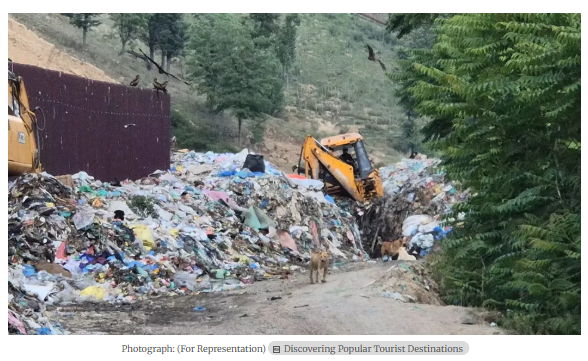
CSR initiatives can focus on waste management, plastic-free tourism, renewable energy, water conservation, and environmental Corporate Social Responsibility can play a significant role in strengthening tourism and rural development by encouraging corporates to invest directly in the places where they operate or have a business presence. Corporates can contribute towards preserving local culture and heritage, improving tourism infrastructure, supporting local artisans and entrepreneurs, creating employment opportunities for youth and women, and promoting sustainable practices. Their CSR initiatives can also focus on waste management, plastic-free tourism, renewable energy, water conservation, and environmental protection. By partnering with local communities, government agencies, NGOs, and tourism stakeholders, corporates can help ensure that tourism growth benefits the local population while protecting the cultural and natural resources of the destination. In this way, CSR can transform corporate presence into a meaningful contribution towards inclusive, sustainable, and community-led tourism development.
Corporate Social Responsibility (CSR) can become a powerful catalyst for sustainable rural tourism by ensuring that tourism development benefits local communities while protecting indigenous culture, conserving the environment, and creating long-term livelihood opportunities. Rather than viewing tourism merely as a commercial activity, CSR can encourage corporates to invest in the social, cultural, economic, and environmental well-being of rural destinations. This approach is closely aligned with the Sustainable Development Goals, particularly those related to poverty reduction, decent work, sustainable communities, responsible consumption, and climate action.
The rise of online travel platforms is an irreversible reality, but it should not come at the cost of marginalizing Kashmir’s travel agents, who have long been the backbone of the region’s tourism industry. Instead of viewing technology as a threat, the focus should be on creating a level playing field where digital innovation strengthens rather than replaces local businesses. The Government, Tourism Department, travel associations, technology companies, and the corporate sector through CSR must work together to digitally empower local travel agents by providing training in digital marketing, online booking systems, artificial intelligence, customer relationship management, and multilingual communication. A dedicated Kashmir Tourism Digital Marketplace should be established to connect registered local travel agents, hotels, houseboats, guides, transport operators, artisans, and rural tourism enterprises directly with tourists, ensuring that a larger share of tourism revenue remains within the local economy. Policies should encourage transparency and fair competition by ensuring online aggregators prominently feature registered local operators while discouraging practices that unfairly disadvantage small businesses. At the same time, local travel agents should focus on offering personalized, authentic, and experience-driven tourism packages that global platforms cannot easily replicate, such as village tourism, cultural immersion, heritage walks, eco-tourism, local cuisine, handicraft trails, and community-based tourism. CSR initiatives can further accelerate this transformation by funding digital infrastructure, technology adoption, skill development, entrepreneurship, and innovation among small tourism enterprises. Such a collaborative approach will not only protect thousands of livelihoods but also strengthen Kashmir’s tourism ecosystem by ensuring that economic benefits reach local communities, promote sustainable and responsible tourism, preserve the region’s unique cultural heritage, and position Kashmir as a globally competitive yet locally inclusive tourism destination. The future lies not in choosing between technology and local travel agents, but in integrating both so that digital progress becomes a catalyst for inclusive growth, resilience, and long-term prosperity for the people of Kashmir.
CSR can support rural tourism by investing in villages with cultural, ecological, and heritage value. Corporate interventions can strengthen basic infrastructure, improve tourism facilities, promote local enterprises, preserve traditional knowledge, and enhance the visitor experience without compromising the authenticity of rural life. One of the greatest strengths of rural tourism is its indigenous identity. CSR can contribute to documenting and promoting local folklore, traditions, festivals, music, oral histories, traditional architecture, foods like WAZWAAN , HAAK , NOONCHAI, KEHWA ETC and indigenous knowledge. It can support artisans involved in handicrafts, handlooms, pottery, wood carving, papier-mâché, embroidery, and other traditional crafts. Restoration of heritage homes, community spaces, village museums, and cultural interpretation centres can further preserve local identity. Training young people in traditional skills can ensure that this heritage is transferred to future generations while creating income through cultural tourism.
CSR can also strengthen rural livelihoods by training local youth as tourist guides, eco-guides, interpreters, adventure tourism professionals, and hospitality workers. Women-led Self-Help Groups can be supported in food processing, catering, handicrafts, traditional cuisine, and homestay operations. Farmers can benefit from agri-tourism initiatives, while rural entrepreneurs can receive support in business development and market linkages. Such interventions can generate local employment, empower women and youth, reduce migration, and ensure that a greater share of tourism income remains within the community.
Sustainable infrastructure is another important area for CSR intervention. Corporates can support eco-friendly public toilets, safe drinking water, solar lighting, walking and cycling trails, visitor information centres, digital connectivity, signage, and facilities for elderly and differently-abled tourists. Such infrastructure must be designed in harmony with local architecture and ecology.
A critical challenge of rural tourism is the generation of waste. CSR can help develop Zero Waste Tourism Villages through scientific waste segregation, collection, transportation, composting, recycling, and Material Recovery Facilities. Waste can be segregated into wet, dry, plastic, glass, metal, and e-waste. CSR can also promote plastic-free tourism by supporting refill water stations, reusable bottles, cloth bags, eco-friendly packaging, and awareness campaigns. Through circular economy models, organic waste can be converted into compost, agricultural waste into useful products, and recyclable materials into crafts and souvenirs, thereby turning waste management into a source of livelihood.
Community participation is essential for sustainable tourism. CSR can fund awareness campaigns, school eco-clubs, clean-village initiatives, responsible tourism programmes, and volunteer clean-up drives. It can also support biodiversity conservation through afforestation, wetland and river restoration, protection of flora and fauna, conservation of medicinal plants, and responsible eco-tourism.
Digital technology can further strengthen rural tourism through websites, mobile applications, social media promotion, QR-based heritage information, online homestay booking, and e-commerce platforms for local products. Capacity-building programmes in hospitality, hygiene, financial literacy, digital marketing, tourist safety, entrepreneurship, and sustainable tourism can equip local communities to manage tourism professionally
For Jammu and Kashmir, CSR can play a transformative role by developing model sustainable tourism villages that showcase the region’s natural beauty and cultural heritage while protecting its fragile ecosystems. Corporate investment can support community-owned homestays, preservation of traditional Kashmiri architecture, promotion of Pashmina, papier-mâché, walnut wood carving and other crafts, training of local eco-guides, renewable energy, rainwater harvesting, and scientific waste management in valleys, lakes, meadows, and trekking routes.
An effective CSR model should bring together government departments, corporates, NGOs, Panchayats, Self-Help Groups, tourism entrepreneurs, educational institutions, and local communities. Such a public-private-community partnership can ensure accountability, local ownership, and long-term sustainability.
Ultimately, CSR can transform tourism from a purely commercial activity into a model of inclusive, community-led, culturally sensitive, and environmentally responsible development. By connecting heritage preservation, livelihood creation, sustainable infrastructure, biodiversity conservation, digital promotion, and scientific waste management, CSR can ensure that tourism remains a source of prosperity without destroying the very culture, communities, and landscapes that attract visitors. In addition to it In essence, the goal should not be to fight technology, but to empower Kashmir’s travel agents to use technology. Digital platforms should serve as partners that expand market access while preserving local livelihoods, ensuring that tourism continues to benefit Kashmir’s communities rather than diverting value away from them.
Article Credit: greaterkashmir