
AI literacy is essential for children and young people, enabling them to verify information, identify errors in AI-generated content, protect their privacy, and seek support when something online confuses or concerns them.
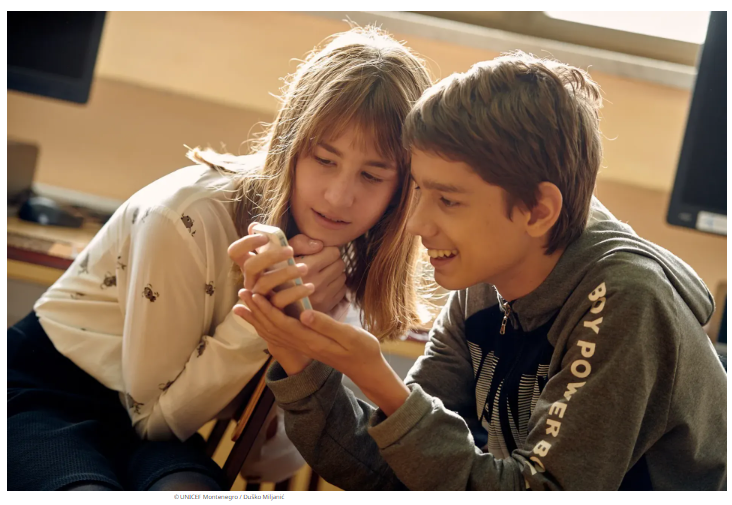
Artificial Intelligence (AI) is already part of the everyday lives of children and young people in Montenegro. This is why AI-specific, and overall digital and media literacy, as well as a safer and more transparent digital environment for every child, are needed, UNICEF said on World Youth Skills Day.
“Young people should not only be users of AI. They need to understand how AI works – in particular, how to distinguish fiction from reality, how to check whether the answers they receive are accurate, and how AI affects their learning, safety and privacy. This is why AI literacy should be part of the education and support provided to children, young people, parents and teachers,” said UNICEF Representative to Montenegro Michele Servadei.
According to the Disrupting Harm study published in April 2026, AI was used by 45 per cent of children aged 12–14 and 56 per cent of young people aged 15–17 in Montenegro. Among children and young people who used AI, 64 per cent used it to help with homework, 51 per cent to find information, 33 per cent for translation, and 32 per cent to create or edit video content and images.
At the same time, AI image-generation tools are creating new and urgent child protection risks. They can be used to create fake sexual images or videos depicting a child, without the child’s consent or even knowledge.
The same study shows that 16 per cent of children and young people in Montenegro who use AI seek advice from it about things that worry them, while only 6 per cent of children recognize the risk that AI may give poor advice. This shows that children need not only technical skills, but also critical thinking, support from adults and a safe space for conversation.
In a video survey by UNICEF Montenegro Young Reporters, young people from Montenegro say they use AI for learning, quick access to information, explanations, hobbies and creative content, while also reflecting on its impact on critical thinking.
“I use AI when I don’t understand chemistry or biology lessons. Sometimes it explains things better than textbooks,” said one girl.
“I use it for quick searches because it saves me a lot of time,” said one boy.
“I mostly use AI for data analysis, finding new information and creating images,” said one boy.
“I don’t use AI. I think it has too much of a negative impact on the development of critical thinking, especially among young people,” said one girl.
UNICEF emphasizes that AI literacy does not mean only knowing how to use new technology. It should enable children and young people to verify information, recognize errors and manipulation in AI responses and content, protect their privacy and seek support when something online confuses or worries them.
AI, digital and media literacy should therefore be more strongly integrated into the revision of curricula, in line with the National Curriculum Framework, which recognizes the importance of educating children and students about the safe use of AI as part of digital competence, digital well-being and digital literacy. Children and young people need to learn how to use AI safely, critically and responsibly as a tool for learning and creativity.
At the same time, it is necessary to work on safer and more transparent AI systems, clear rules for the protection of children’s data, and child-friendly ways to report harmful content and receive support.
Protecting children in the world of AI requires joint action by the education system, social and child protection services, the police, the judiciary, institutions responsible for cybersecurity, the media, as well as technology and telecommunications companies.
The private sector can be an important partner in creating a safer digital environment for children. AI developers and technology companies have a particular responsibility to ensure that AI systems are designed with safety and transparency in mind, while businesses more broadly can contribute through the application of standards for protecting children’s data, investment in media, digital and AI literacy, and partnerships with schools, institutions and organizations working with children.
UNICEF will continue to support Montenegro in strengthening laws, policies and services to protect children from online and AI-enabled sexual exploitation and abuse; integrating AI, digital and media literacy into curricula and teacher support; and expanding parenting programmes to help parents and caregivers better understand children’s online experiences and support them to use technology safely, critically and responsibly.
Article Credit: unicef