
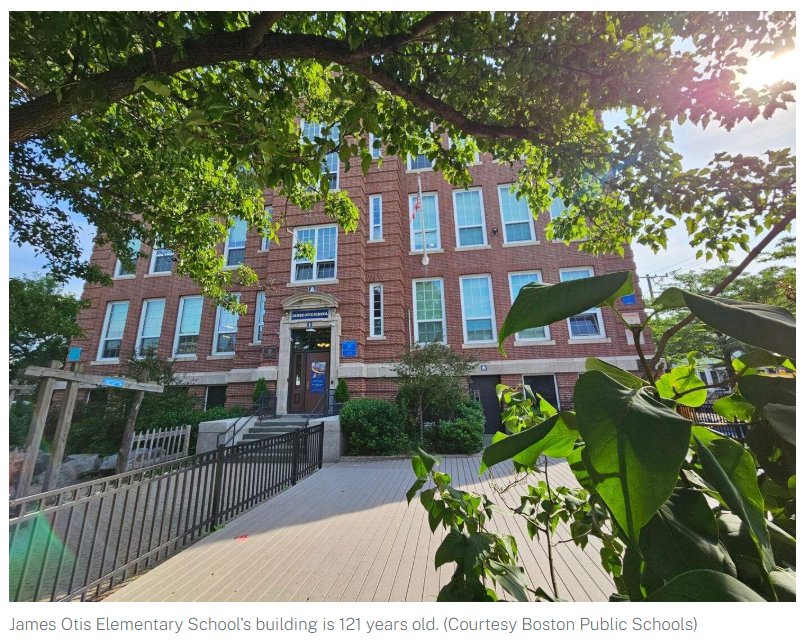
On hot days, the classrooms at James Otis Elementary in East Boston could climb into the high 80s. Even popsicles handed out to keep students cool didn’t help, melting instantly.
The brick building is 121 years old. “ It was never designed to meet the needs of climate changes of today,” Principal Paula Cerqueira-Goncalves said.
Boston Public Schools officials have installed air conditioners in most of the district’s buildings over the last few years, but Otis Elementary was one of a handful that lacked the electrical capacity to support window units. So the school went without.
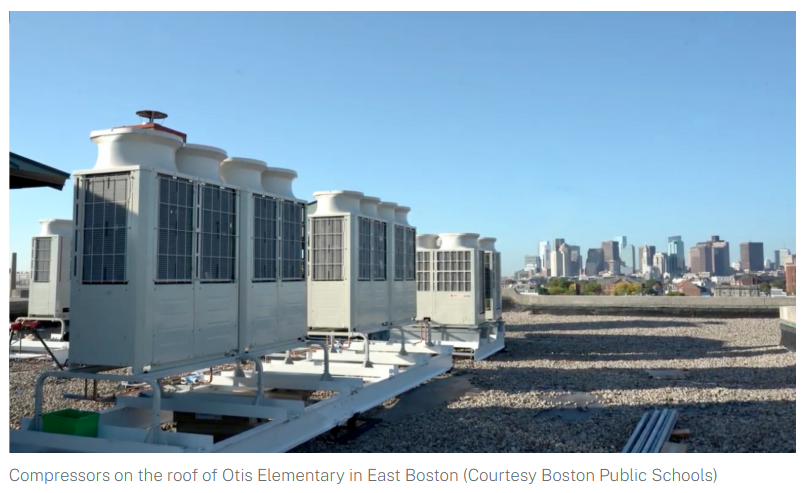
This year a new cooling system finally kicked in at Otis, thanks to a $5.7 million overhaul that includes all-electric cooling, heating, ventilation and filtration systems.
While the AC is nice, the changes are about more than just comfort. A city ordinance requires owners of large buildings to drastically reduce their facilities’ climate emissions by 2050. That includes municipal buildings like Otis, which is the first among 100 Boston Public Schools facilities that must ditch fossil fuels.
Buildings are the single largest emitter of climate-warming gasses in Boston, and according to the city, schools contribute more than 60% of emissions from municipal buildings.
Katherine Walsh, who oversees planning and sustainability for Boston Public Schools, said the retrofit is important for student and teacher health. Studies have shown that exposure to extreme heat and humidity can harm the body’s organs and may also affect young children’s development. Researchers have also found evidence suggesting hot temperatures may reduce student achievement.
Otis Elementary serves a majority of Latino students, and its neighborhood of East Boston is designated as an “environmental justice community” because of the high proportion of non-white residents.
“ We want the students that are coming to school to feel that they’re going to a safe place that cares about them,” Walsh said. Children will be “able to play outside in the warmer months, and when they come inside, they now have that respite.”
The modifications began two years ago, Cerqueira-Goncalves said. HVAC experts worked throughout the school year, clocking in after the children had gone home.
They installed heat pumps, which provide heating and cooling and use less energy than traditional gas or oil-powered systems or window unit air conditioners. They also upgraded the school’s air filtration, which should reduce air pollution in the classrooms of the school, located next to Logan Airport.
Since they finished the project, “there are fewer complaints related to heat and discomfort during the warmer months,” said Cerqueira-Goncalves. She said the students are now more comfortable and focused.
“Teachers are able to teach, and students don’t feel like, ‘I need to go see the nurse. I’m not feeling well,’” she said.
Cerqueira-Goncalves plans to retire this year after 38 years at Otis and said she’s proud the retrofit will be part of her legacy.
“Seeing this project come to life during my final year literally feels like a culmination of years of advocacy for our students, our staff and our families,” she said.
Article Credit: wbur