
Climate action is often discussed in terms of carbon reduction, regulation and long-term environmental risk. But one thing that can often be overlooked is the very human side to sustainability.
The conversation has evolved beyond a sustainability issue to now being recognised as a commercial, cultural and people issue too.
In parallel, businesses are facing growing challenges around employee engagement, wellbeing and retention. Workplace stress is rising, and many employees are reassessing what they want from work beyond salary and progression. Increasingly, what they want is a sense of purpose – a connection to the world beyond the office.
That is why I believe climate action and employee wellbeing are far more closely linked than many organisations realise. Climate action should be moving beyond sustainability teams and become a part of wider HR and people strategies. It’s what employees expect, and I fully embrace this. A sustainability strategy is only as effective, as the people working every day to implement it.
There is a strong role business leaders can have in empowering employees to do their bit for the environment while at work – which also has many other positive repercussions for business that are often overlooked.
Tackling the problem of modern laptop lives
Modern working life can often feel relentless. Many employees spend the majority of their day indoors, sitting at desks, moving between meetings and managing constant digital communication.
Did you know that office employees spend an average of 12 hours per day indoors on a typical working day? Our research tells us that 84% of people believe working inside all day can have a negative impact on their mental health1.
But that doesn’t have to be the case. Spending even a short time outdoors can have a transformative effect. 92% of people believe they would be happier and more productive if they could spend more time outdoors1.
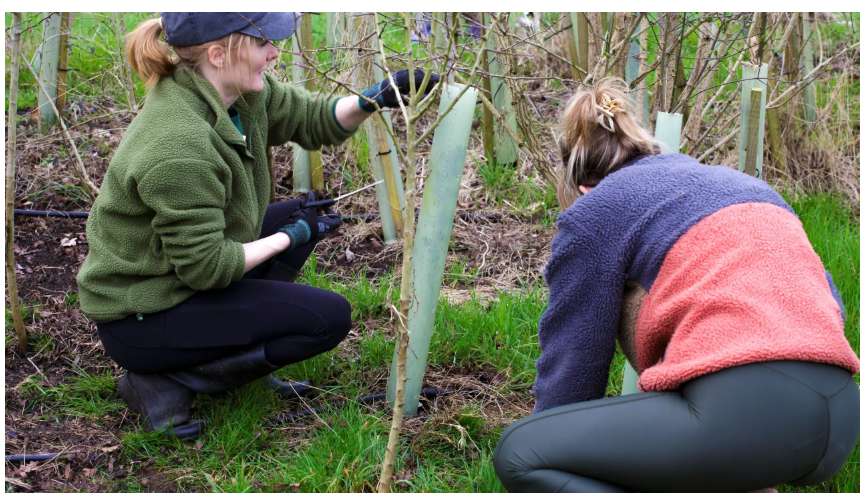
Taking climate action during working hours – whether it is planting trees, restoring habitats or taking part in local environmental projects, gives employees a break from routine and the opportunity to contribute to something tangible and positive. It provides a sense of perspective that is often difficult to achieve in day-to-day working life.
Importantly, it also helps employees feel part of something bigger than themselves.
Green values actively support recruitment and retention
Employees increasingly want to work for businesses whose values align with their own, particularly around sustainability and social impact.
At Ecotone, when we’re recruiting, people come for an interview because they love our environmentally and ethically conscious brands. They tend to join and stay with us because of the culture we have at Ecotone as a whole, where we create opportunities for people to personally support biodiversity.
One of the ways we do this, is our nature-based volunteering policy. Knowing how difficult it can be for our office teams to spend time in nature during the working week, this year we expanded our volunteering policy to three paid days off each year to take climate action. It’s a practical and visible way for us to live our values and actively connect us all to the natural world.
When employees can actively participate in climate action, rather than simply hearing about sustainability targets in presentations or reports, it creates a much deeper sense of ownership and engagement.
The wellbeing and productivity connection
There is also a strong link between wellbeing and productivity.
Employees often return from our environmental volunteering days feeling refreshed, motivated and more connected to colleagues. In our research of UK office workers, they estimated that their productivity would increase by over 50% if they could spend more time outdoors1.
Working together as a team, towards a worthwhile goal outside the office, fosters better collaboration when back at their desks – resulting in a stronger workplace culture with a lasting impact.
Environmental volunteering creates opportunities for employees from different departments and levels of seniority to work together in a completely different environment. It brings people together: Hierarchies disappear, conversations become more open and relationships strengthen.
Making programmes accessible and affordable
Importantly, these initiatives do not need to be expensive or overly complex to deliver impact.
One of the misconceptions around corporate sustainability initiatives is that they require significant investment.
In reality, many nature-based volunteering programmes can be implemented relatively affordably through partnerships with charities, local environmental organisations and community groups.
The key is authenticity. Employees are far more likely to engage with initiatives that feel meaningful and hands-on, rather than purely symbolic.
For businesses considering how to get started, a practical first step is identifying local organisations already delivering environmental projects within the community. Partnerships with trusted organisations can make it easier to organise volunteering days, provide expertise and ensure activities deliver genuine environmental value.
At Ecotone UK, we have seen first-hand how environmental volunteering not only helps us to give back to nature but has wide-reaching benefits for our people and our business. Through our partnership with The Tree Council, colleagues across the business have taken part in tree planting and nature restoration activities that support biodiversity while also creating opportunities to reconnect, reset and engage in a different way.
Ultimately, investing in climate action is also an investment in people. And the organisations that recognise that connection are likely to be the ones best positioned for the future.
Article Credit: edie