
How Trump Tariff Is Making America “UnGreat”
Who really pays the tariffs and who benefits?
Chandni Jafri, Founder & ED, SLSV
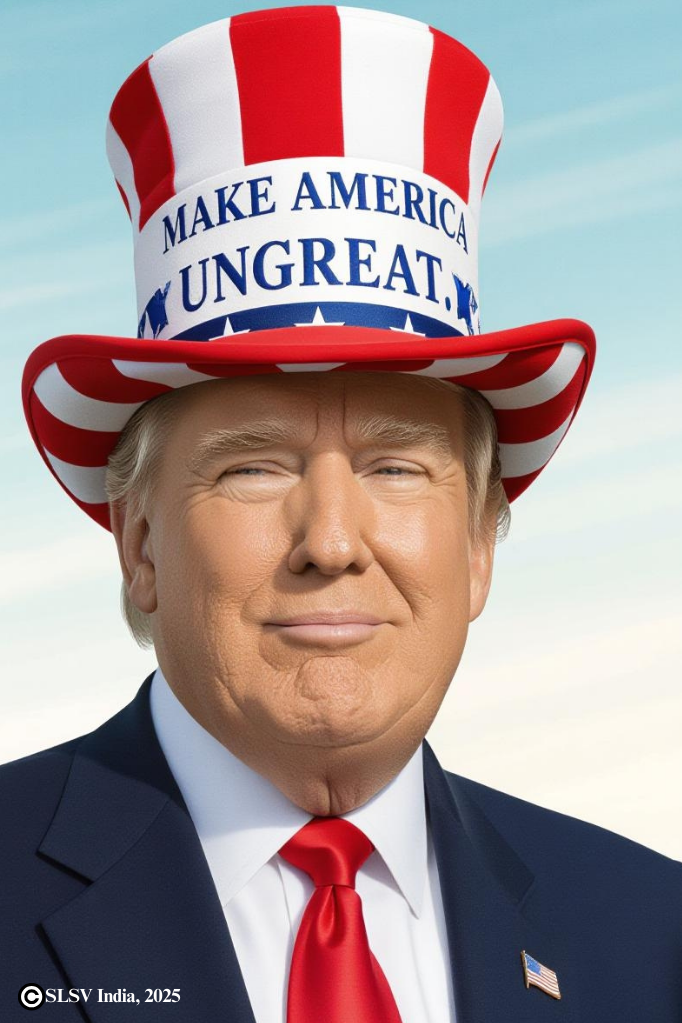
When Donald Trump first presented his strategy of aggressive tariffs, the slogans promised a revival of American greatness. Yet beneath the populist rhetoric, Trump’s tariffs may be doing the exact opposite—making life harder, not easier, for ordinary Americans. The distinctive red hats may still proclaim “Make America Great Again,” but for many US buyers, the reality is a steady slide toward higher costs, shrinking options, and a compromised standard of living.
The True Payers of Tariffs
Despite official justifications, tariffs are not paid by foreign exporters but by American importers when goods reach US borders. Initially, US companies tried to absorb some of these costs, but as tariffs have become entrenched and broadened, a growing body of economic evidence shows that the burden is rapidly being passed on to US consumers.
Recent analyses estimate that while consumers initially bore just 22% of the cost, this figure could escalate to 67% or even higher as supply chains adjust.
The result?
Everything from basic household goods to electronics and automobiles is becoming more expensive. Domestic manufacturers, capitalizing on reduced foreign competition, frequently raise their prices too, compounding the inflationary effect.
Tariffs Fill Federal Coffers, Sustainability Suffers
The Trump administration has boasted that tariff receipts have filled federal coffers, with revenue hitting record highs and providing a modest, short-term offset to budget deficits.
Over $87 billion was collected in the first half of 2025 alone. This amount surpassed the entire tariff revenue collected in 2024, which was $79 billion.
However, this apparent windfall conceals a deeper problem: long-term sustainability. As companies grapple with increased costs, some switch suppliers or reduce import volumes, leading to diminishing returns for the treasury over time. Meanwhile, input cost inflation ripples across the economy, keeping the overall inflation rate above the Federal Reserve’s target and putting further pressure on household budgets well beyond the immediate impact of higher prices.
A Triple Bottom Line Failure
The triple bottom line stresses the importance of not just profit (economic value), but also social equity and environmental sustainability. Trump’s tariff-centric approach fails on all three counts:
Economic failure: Higher tariffs reduce purchasing power, slow GDP growth, and erode US competitiveness without creating meaningful, sustainable jobs.
Social Failure: Tariffs disproportionately impact low- and middle-income Americans who spend a larger share of their income on everyday goods, deepening inequality and fueling consumer frustration.
Environmental Failure: Churning supply chains and shifting sourcing to avoid tariffs can increase carbon footprints, lead to inefficient production, and undermine global cooperation on shared challenges.
Conclusion
Trump’s tariffs offer the illusion of national renewal while undermining the economic security and quality of life for millions of Americans. Rather than making America “great,” the policy may make it less competitive, less fair, and less sustainable in years to come—betraying the triple bottom line principles that are vital for a truly resilient future.